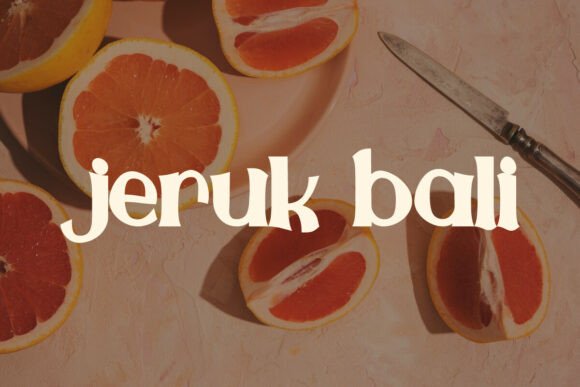
Evaluating the Jeruk Bali Display Typeface
In the landscape of digital typography, display fonts serve a specific purpose: to command attention and establish an immediate visual hierarchy. The Jeruk Bali font is a distinct entry in this category, characterized by its bold weight and playful structure. For designers, brand managers, and content creators, selecting a typeface requires more than just aesthetic appreciation; it demands an understanding of how a font functions within a broader communication strategy. This evaluation examines the characteristics of Jeruk Bali, its practical applications, and the considerations necessary for determining if it aligns with specific project goals.
Understanding the Design Characteristics
The Jeruk Bali typeface merges heavy weight with elegant, high-contrast curves to create a look that is both powerful and whimsical. Unlike standard sans-serif or serif fonts designed for body text, Jeruk Bali is engineered as a display solution. Its defining features include large, dramatic serifs and chunky letterforms that give the text a substantial presence on the page or screen.
The design relies heavily on contrast. While the strokes are thick and robust, the inclusion of surprising curves softens the overall appearance, preventing the text from feeling overly rigid or industrial. This balance between "chunky" and "elegant" allows the font to convey a sense of confidence without sacrificing approachability. The result is a contemporary aesthetic that feels slightly retro yet distinctly modern, making it a versatile tool for various visual identities.
Reasons for Interest in Jeruk Bali
Designers often seek out fonts like Jeruk Bali when they need to break away from conventional corporate aesthetics. The primary reason for interest usually stems from the need for a memorable brand title or an impactful headline. In a crowded digital environment, standard fonts can blend into the background. Jeruk Bali offers a unique silhouette that immediately draws the eye, ensuring that key messages are not overlooked.
Furthermore, the font's personality resonates with projects aiming to communicate fun, energy, or creativity. The high-contrast curves suggest movement and dynamism, which can be particularly appealing for industries that value innovation and style. Whether for a startup looking to appear fresh or an established brand seeking a rebranding refresh, the distinctiveness of Jeruk Bali provides a strong starting point for visual differentiation.
Benefits and Practical Applications
The robust weight of the Jeruk Bali font ensures legibility even at larger sizes, making it ideal for posters, banners, and packaging where impact is paramount. Its whimsical nature makes it a strong fit for several specific sectors:
- Food and Beverage Branding: The playful curves and bold strokes evoke a sense of flavor and enjoyment, fitting well with coffee shops, bakeries, and casual dining establishments.
- Modern Packaging: On product labels, the font stands out on shelves, helping products catch the consumer's attention amidst competitors using more traditional typography.
- Fashion Logos: The stylish and slightly retro vibe aligns well with streetwear brands or fashion lines that aim for a trendy, youthful demographic.
- Event Headlines: For concerts, festivals, or art exhibitions, the font conveys excitement and energy effectively.
In these contexts, the font acts as a visual anchor. It sets the tone for the entire design, allowing other elements to complement rather than compete with the main message. The unique design ensures that the brand remains memorable long after the initial interaction.
Tradeoffs and Considerations
While Jeruk Bali offers significant stylistic advantages, there are tradeoffs that must be considered before implementation. The most critical limitation is readability at small sizes. Due to its complex curves and heavy weight, the font loses clarity when scaled down. It is not suitable for body text, captions, or detailed information where legibility is essential. Attempting to use Jeruk Bali for paragraphs can lead to visual clutter and reader fatigue.
Additionally, the boldness of the typeface means it should be used sparingly. Overuse can overwhelm a design, making it feel chaotic rather than stylish. The high-contrast nature of the font also requires careful consideration of color palettes. Light colors on light backgrounds may struggle to maintain the necessary definition, while dark colors on dark backgrounds might obscure the intricate details of the serifs.
Another consideration is the longevity of the trend. Fonts with a strong "retro-modern" aesthetic can sometimes feel dated if overused or associated too closely with a specific era. Designers should evaluate whether the whimsical style aligns with the long-term vision of the brand or if it serves a temporary campaign better.
Situations for Alternatives
There are scenarios where Jeruk Bali may not be the optimal choice, and exploring alternatives is advisable. If the project requires a neutral, authoritative, or serious tone, the playful nature of this font could undermine the message. For example, legal documents, financial reports, or medical communications require clarity and sobriety, traits that are better served by clean sans-serifs or traditional serifs.
Furthermore, if the design involves multilingual support with complex character sets, the availability of glyphs in the Jeruk Bali family should be verified. Some display fonts have limited character ranges, which can be problematic for global campaigns. In such cases, a more comprehensive typeface family might be a safer investment.
Finally, for projects requiring extensive scalability across various mediums—from mobile app icons to billboards—a font with simpler geometry might offer better performance. While Jeruk Bali looks impressive in print and large digital formats, its complexity can sometimes cause rendering issues on lower-resolution screens.
Decision-Making Insights
Determining whether Jeruk Bali aligns with your goals requires a clear assessment of the project's primary objective. Ask yourself if the priority is to grab attention quickly or to facilitate easy reading. If the goal is the former, and the context allows for a bold, slightly retro statement, Jeruk Bali is a compelling option.
To make an informed decision, consider creating mockups of the font in its intended environment. Test it against different background colors and alongside other design elements. Observe how the chunky letterforms interact with images and icons. Does the font enhance the brand identity, or does it distract from it? These practical tests will reveal whether the font's unique curves and heavy weight serve the design effectively.
Ultimately, the Jeruk Bali typeface is a specialized tool. It excels in creating impactful headlines and brand titles that demand attention. However, its limitations regarding size and tone mean it should be paired carefully with complementary fonts for body text. By understanding its strengths and constraints, designers can leverage Jeruk Bali to create work that is bold, captivating, and distinctly fashionable without compromising on functionality.