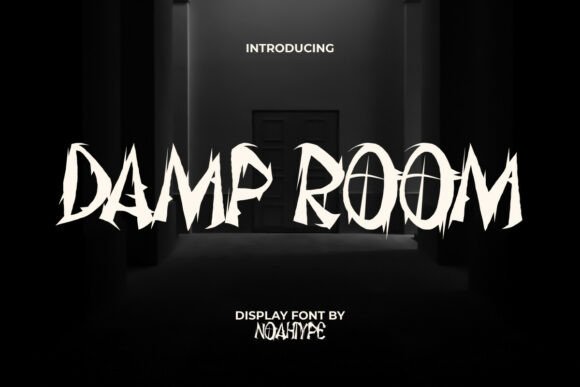
Damp Room: A Critical Evaluation of an Aggressive Display Typeface
In the crowded landscape of digital typography, display fonts often struggle to balance aesthetic impact with legibility. Damp Room does not attempt this balance; instead, it leans entirely into the chaotic and unsettling. As a horror-themed display font characterized by sharp, distressed edges and fragmented letterforms, it serves a specific, high-intensity niche. For designers tasked with conveying fear, grit, or underground subcultures, Damp Room offers a visual language that standard grotesque or slab-serif typefaces simply cannot replicate. This evaluation examines the practical utility, design characteristics, and real-world application of Damp Room for professionals seeking to inject raw energy into their visual projects.
The Design Philosophy of Distress and Fragmentation
At its core, Damp Room is designed to evoke a visceral reaction. The typeface abandons the clean geometry of modernist design in favor of jagged lines and irregular spacing. The glyphs appear as if they have been eroded by time, decay, or violence. This "distressed" aesthetic is not merely a texture applied over a standard font; it is intrinsic to the structure of each character. The edges are uneven, creating a sense of instability that mirrors the psychological unease found in horror narratives.
From a typographic standpoint, the font relies heavily on negative space and aggressive contrast. The fragmentation of letterforms creates a unique rhythm when set in a word, making the text feel alive and unpredictable. This quality makes Damp Room particularly effective for headlines where the goal is to stop the viewer immediately. However, this same characteristic limits its use to short bursts of text. Attempting to set paragraphs in Damp Room would result in poor readability, a common pitfall when working with highly stylized display fonts. The design intent is clear: shock value and atmospheric immersion take precedence over information density.
Practical Applications in Media and Entertainment
The primary strength of Damp Room lies in its ability to define a genre instantly. When used correctly, it acts as a visual shorthand for the macabre, the gritty, and the intense. Several industries benefit significantly from these attributes:
- Motion Picture Posters: Horror and thriller films require typography that complements the tension of the imagery. Damp Room works exceptionally well for title treatments on movie posters, where the font itself becomes part of the narrative. Its menacing character can suggest danger before a single frame is viewed.
- Music Industry Branding: Heavy metal, deathcore, and industrial music scenes rely on dark, aggressive aesthetics. Album covers and tour merchandise utilizing Damp Room communicate the intensity of the sound visually. The raw energy of the font aligns perfectly with the sonic aggression of these genres.
- Gaming Titles: Video games, particularly those in the survival horror or dark fantasy categories, need titles that promise an immersive, often terrifying experience. Damp Room provides a title treatment that feels organic to environments filled with decay and danger.
- Event Marketing: Promotional materials for haunted attractions, escape rooms, or underground art exhibitions can leverage the font's eerie quality to build anticipation and set the mood for attendees.
In these contexts, Damp Room functions as more than just text; it is a graphic element that contributes to the overall brand identity. The font's ability to convey "dark energy" allows marketers to establish a tone without relying solely on imagery, which is crucial in thumbnail-heavy digital environments like social media feeds or streaming platforms.
Evaluating Usability and Technical Performance
While the aesthetic appeal of Damp Room is undeniable, its practical usability requires careful consideration. Like many aggressive display fonts, it presents challenges regarding consistency and scalability. The fragmented nature of the glyphs means that at smaller point sizes, the details can become indistinguishable, turning the text into a muddy blob. Therefore, Damp Room should be reserved for large-scale headers, logos, and hero text where the resolution is high enough to preserve the intricate distress details.
Consistency across different weights and styles is another factor to evaluate. If a project requires a family of fonts (e.g., bold, italic, light) to maintain hierarchy, Damp Room may fall short if it is only available in a single weight. In such cases, designers must pair it with a complementary sans-serif or serif font for body copy and secondary headings. A strong pairing strategy is essential to ensure the final composition remains professional and readable. For instance, pairing the chaotic energy of Damp Room with a clean, neutral geometric sans-serif can create a striking contrast that highlights the horror elements while maintaining structural integrity.
Furthermore, the reliability of the font file is paramount for professional workflows. High-quality typefaces should render consistently across various operating systems, web browsers, and print environments. Users should verify that the Damp Room font files include proper kerning pairs and ligatures, even within a distressed style, to prevent awkward spacing that could break the illusion of the design. If the font lacks these technical refinements, it may require manual adjustment in layout software, adding time to the production process.
Who Should Use Damp Room?
Damp Room is not a universal solution for all design needs. It is a specialized tool best suited for specific audiences and project goals. Professionals who will find the most value in this typeface include:
- Creative Directors in Horror/Thriller Genres: Those responsible for the visual identity of film, television, or gaming projects within the horror spectrum will find Damp Room indispensable for establishing tone.
- Merchandise Designers: Artists creating apparel, patches, or posters for bands and alternative lifestyle brands can utilize the font to tap into established subcultural aesthetics.
- Freelance Graphic Designers: Freelancers working on one-off projects requiring a distinct, edgy look can use Damp Room to deliver a high-impact result quickly, provided they understand its limitations regarding body text.
- Marketing Specialists for Niche Events: Marketers promoting events that rely on atmosphere—such as Halloween festivals or gothic conventions—can use the font to attract the right demographic through visual signaling.
Conversely, corporate brands, educational institutions, or businesses aiming for a trustworthy, approachable image should avoid Damp Room. Its aggressive nature can inadvertently signal instability or hostility, which is counterproductive for sectors like finance, healthcare, or family-oriented services.
Limitations and Strategic Considerations
To use Damp Room effectively, one must acknowledge its constraints. The font's "shock value" can diminish if overused. In a campaign where every headline utilizes the same distressed aesthetic, the impact fades, and the design may begin to feel clichéd rather than innovative. Restraint is key; Damp Room should be used sparingly to highlight critical information or emotional peaks within a larger design system.
Additionally, accessibility is a concern. The jagged edges and low contrast inherent in some distressed designs can pose reading difficulties for individuals with visual impairments. While Damp Room is intended for display purposes where legibility is secondary to impact, designers must consider whether the target audience includes users who rely on screen readers or require high-contrast text. In digital applications, ensuring sufficient color contrast between the font and the background is non-negotiable for compliance with web accessibility standards.
Finally, the longevity of the trend matters. Distressed and grunge typography has seen cycles of popularity. While Damp Room captures a timeless sense of dread, the specific execution of "fragmented" text can sometimes date a design. To ensure long-term value, designers should focus on how the font interacts with other elements of the composition rather than letting the font carry the entire weight of the design.
Conclusion
Damp Room stands out as a potent asset for designers operating within the horror, heavy metal, and dark aesthetic domains. Its aggressive, fragmented design successfully communicates fear and intensity, making it a valuable resource for movie posters, album art, and gaming titles. However, its effectiveness is contingent upon disciplined application. By respecting its limitations regarding size, readability, and frequency of use, professionals can harness the raw energy of Damp Room to create memorable, impactful visuals. For those seeking a typeface that delivers a chilling, unforgettable presence, Damp Room offers a compelling, albeit specialized, solution.