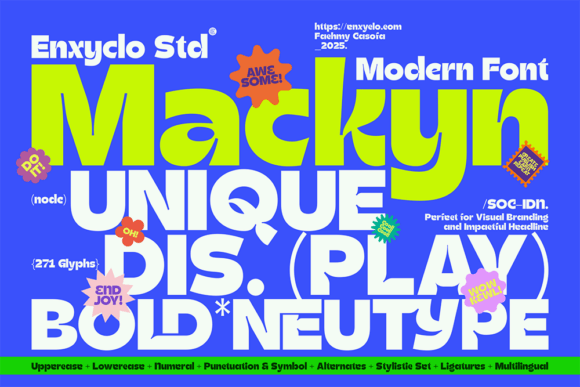
Mackyn: A Bold Display Font for Strategic Brand Implementation
In the crowded landscape of digital and print media, the choice of typography often dictates the first impression a brand makes. It is not merely about selecting letters that look aesthetically pleasing; it is about choosing a tool that aligns with your strategic goals and execution workflow. Mackyn enters this space as a superbly bold display font designed to set logos and headlines apart from the crowd. Unlike generic typefaces that blend into the background, Mackyn is specially crafted to be bold and beautiful, fusing robust geometric shapes with trendy curves. This distinct combination offers a contemporary twist that ensures visual work leaves a striking impression. For professionals managing branding projects, marketing campaigns, or editorial designs, understanding how to integrate Mackyn into a broader creative process is essential for maximizing its impact.
Defining the Role of Mackyn in Visual Strategy
Before downloading any asset, it is crucial to define where it fits within the project lifecycle. Mackyn is not a body text font intended for long-form reading; rather, it is a specialized instrument for high-impact communication. Its design philosophy centers on confidence, flair, and innovation. When planning a new identity system or a major campaign launch, Mackyn serves as the anchor for key visual elements. It is the ideal partner for daring logo designs, impactful display typography, and potent headlines.
The font's architecture combines the stability of geometric forms with the fluidity of modern curves. This duality allows it to communicate both reliability and creativity simultaneously. In a practical workflow, this means Mackyn can be deployed early in the concept phase to sketch out mood boards and explore brand personalities. Because it possesses an extensive character set incorporating uppercase, lowercase, numerals, punctuation, and symbols, it provides enough flexibility to test various layouts without needing to switch fonts mid-concept. This consistency during the ideation phase helps teams maintain a cohesive vision before moving to final production.
Technical Integration and File Compatibility
Successful implementation relies heavily on technical compatibility across different platforms and software environments. Mackyn is available in OTF, TTF, and WOFF file formats, ensuring broad usability whether you are working in desktop publishing applications like Adobe Illustrator and InDesign or developing for web interfaces. The inclusion of WOFF files is particularly significant for digital workflows, allowing designers to embed the font directly into websites while maintaining performance standards.
When integrating Mackyn into a team environment, organization is key. Designers should establish a clear naming convention for the font files and ensure they are stored in accessible, version-controlled directories. This prevents confusion between different weights or styles if the family expands in the future. Furthermore, verifying that all collaborative tools support the specific format being used avoids rendering errors. For instance, while OTF files offer advanced typographic features preferred by print designers, TTF files remain the standard for many cross-platform operating systems. Ensuring the right format is selected for the specific output medium streamlines the handoff process between design, development, and printing teams.
Leveraging Advanced Typographic Features
One of the most powerful aspects of Mackyn is its depth beyond standard characters. With 271 glyphs and multilingual support, the font caters to a global audience and myriad design scenarios. However, the true value lies in the alternates and stylized sets. These features allow for the creation of truly personalized designs that avoid the "cookie-cutter" look often associated with pre-made templates.
In practice, utilizing these alternates requires a deliberate approach. During the logo design phase, a designer might swap a standard 'a' for a more stylized variant to create a unique lockup. Similarly, cohesive ligatures can enhance the flow of text in headlines, connecting letters in ways that improve readability and aesthetic appeal. To manage this efficiently, users should familiarize themselves with the OpenType panels in their design software. Creating a style guide that documents which alternates are approved for specific use cases—such as using a particular ligature only in the primary logo but not in social media headers—ensures brand consistency across all touchpoints.
Workflow Applications Across Industries
The versatility of Mackyn makes it suitable for a wide range of sectors, yet its application varies depending on the industry's specific needs. For startups and tech companies wishing to create visual branding with impact, Mackyn offers a modern edge that signals innovation. In the tech sector, where clarity and forward-thinking are paramount, the font's geometric roots provide a sense of structure, while its curves suggest adaptability.
Startups and Tech: In the early stages of a startup, resources are often limited, making every design decision critical. Using Mackyn for the logo and primary headlines creates an immediate professional presence. It works exceptionally well on digital assets like app icons, landing page banners, and pitch decks. The bold weight ensures legibility even at smaller sizes on mobile devices, a crucial factor for user experience (UX) design.
Packaging and Advertising: For consumer goods, packaging must stand out on a shelf amidst visual noise. Mackyn's robust shapes command attention. When designing packaging, marketers should consider how the font interacts with product photography and color palettes. The font's high contrast and strong lines make it an excellent choice for advertising materials where the headline needs to stop the scroll or the eye. Testing the font against various background textures and colors during the mockup phase is a vital step to ensure the message remains clear.
Editorial and Publishing: While not a body text font, Mackyn excels in contemporary editorial designs. It is perfect for magazine covers, section dividers, and feature headlines. Editors can use it to break up dense blocks of text, guiding the reader through the content hierarchy. By pairing Mackyn with a neutral sans-serif for body copy, publishers can create a sophisticated layout that balances drama with readability.
Best Practices for Long-Term Consistency
Integrating a new font like Mackyn into an existing brand ecosystem requires careful planning to maintain quality control over time. As a brand grows, the risk of inconsistent application increases. To mitigate this, organizations should develop comprehensive usage guidelines. These guidelines should specify when to use Mackyn versus other typefaces, appropriate sizing scales, and acceptable color treatments.
Efficiency in the creative process also depends on how well the font is organized within digital asset management systems. Tagging Mackyn files with relevant keywords such as "display," "bold," "logo," and "headline" ensures that team members can quickly locate the correct assets. Additionally, regular audits of marketing materials help identify instances where the font may have been misused or rendered incorrectly due to software updates or platform limitations.
Long-term use also involves monitoring trends. While Mackyn is designed with a contemporary twist, design preferences evolve. However, because the font is rooted in classic geometric principles, it possesses a timeless quality that reduces the need for frequent rebranding. This longevity is a significant advantage for businesses looking to invest in a stable visual identity. By focusing on the fundamental strengths of the typeface—its clarity, boldness, and versatility—brands can leverage Mackyn effectively for years without it appearing dated.
Optimizing the Creative Decision Process
Choosing Mackyn is a strategic decision that impacts the entire visual workflow. It is not just an aesthetic choice but a functional one that influences how messages are received. Before committing to the font, teams should conduct a comparative analysis against current assets. Does Mackyn complement the existing color palette? Does it scale well across different mediums? Answering these questions during the preparation phase saves time and resources later.
Furthermore, involving stakeholders in the selection process ensures buy-in. Presenting mockups that demonstrate Mackyn in real-world scenarios—such as a business card, a website header, and a billboard—helps non-designers visualize the potential outcomes. This collaborative approach fosters a shared understanding of the brand's direction and reduces friction during the execution phase.
Ultimately, Mackyn is a chic and dynamic choice that elevates brand identity when applied with intention. Whether for a small business owner crafting their first logo or a large corporation refreshing its marketing materials, the font provides the necessary tools to create striking results. By adhering to best practices in integration, technical setup, and consistent application, creators can harness the full power of Mackyn to ensure their work never goes unnoticed. In a world saturated with content, having a typeface that encapsulates confidence and innovation is not just an advantage; it is a necessity for standing out.