Why Varsity Amsterdam Stands Out in Modern Typography
In the crowded landscape of digital and print design, finding a typeface that balances legibility with personality is often a challenge. Designers frequently oscillate between rigid geometric sans-serifs that feel too corporate and overly decorative scripts that sacrifice readability for style. Varsity Amsterdam emerges as a compelling solution to this dichotomy, offering a casual yet neat display font that bridges the gap between handwritten charm and professional polish. It is not merely another novelty font; it is a functional asset designed to bring warmth and approachability to branding projects without compromising on clarity.
The value of Varsity Amsterdam lies in its ability to humanize digital interfaces and static layouts. In an era where audiences are increasingly skeptical of automated or sterile content, typography plays a pivotal role in establishing trust and connection. This font captures the essence of modern handwritten typography but refines it through crisp structure and balanced letterforms. For professionals ranging from small business owners to seasoned marketing directors, understanding the practical application of such a tool can significantly elevate the quality of their visual communication.
Defining the Aesthetic: Simplicity Meets Approachability
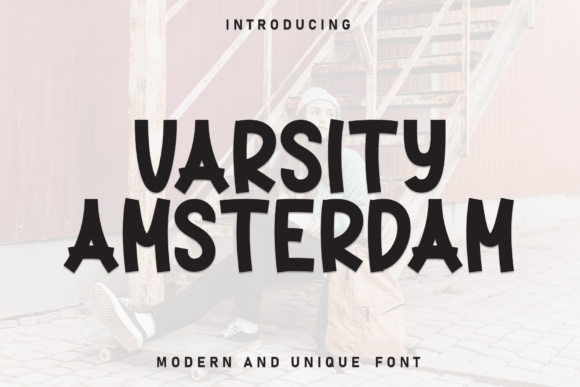
At its core, Varsity Amsterdam is defined by its clean lines and subtle rounded edges. Unlike traditional varsity fonts that often lean heavily into collegiate or athletic themes with thick serifs and blocky structures, this typeface adopts a softer, more contemporary stance. The rounded edges are not exaggerated; they are just enough to soften the impact of the letters, creating a friendly vibe that feels inviting rather than aggressive.
This aesthetic choice serves a specific purpose. When applied to headlines or packaging, the font suggests accessibility. It tells the viewer that the brand behind the message is open, modern, and personable. The simplicity of the design ensures that it does not distract from the actual content. Instead, it frames the text in a way that enhances comprehension while adding a layer of emotional resonance. This balance is crucial for brands aiming to appear professional yet relatable, a combination that is often difficult to achieve with standard serif or slab-serif options.
Key Characteristics and Structural Integrity
What separates Varsity Amsterdam from other casual display fonts is its attention to structural integrity. Many handwritten-style fonts suffer from inconsistent stroke widths or erratic spacing, which can make them difficult to read at smaller sizes or in long paragraphs. However, this typeface maintains a high degree of consistency across its character set. The letterforms are balanced, ensuring that the visual weight is distributed evenly, which contributes to its overall neat appearance.
- Clean Lines: The strokes are uniform and precise, avoiding the messy or ink-splattered look common in distressed script fonts.
- Balanced Letterforms: Each character is proportioned to sit comfortably next to others, preventing awkward gaps or collisions.
- Subtle Rounding: The curves are gentle, providing a polished finish that elevates the perceived quality of the design.
- Modern Handwritten Feel: It mimics the natural flow of handwriting without sacrificing the alignment required for professional typesetting.
These characteristics make Varsity Amsterdam particularly effective for applications where the text needs to stand out but still remain part of a cohesive visual system. The font's versatility allows it to function well as a standalone element or as a complementary piece to more neutral body text fonts. Its reliability in maintaining clarity ensures that the message is delivered effectively, regardless of the medium.
Practical Applications in Branding and Digital Content
The utility of Varsity Amsterdam extends across various sectors, making it a valuable addition to any designer's toolkit. Its primary strength lies in its adaptability to different contexts, from physical packaging to dynamic digital environments. For entrepreneurs launching a new product line, this font can serve as a distinctive voice for logos and labels. The warm and inviting touch it adds to packaging can influence consumer perception, suggesting that the product inside is crafted with care and attention to detail.
In the realm of digital content, the font performs exceptionally well in headlines, call-to-action buttons, and social media graphics. As users scroll through feeds filled with generic stock imagery and standard fonts, a headline rendered in Varsity Amsterdam can capture attention immediately. Its friendly nature encourages engagement, making it suitable for lifestyle blogs, educational platforms, and creative portfolios. The font's crisp structure ensures that it remains legible even on mobile screens, where space is limited and resolution varies.
Furthermore, the font's versatility supports a wide range of industries. While it might initially seem suited for casual businesses like cafes or boutiques, its polished finish makes it appropriate for tech startups, wellness brands, and educational institutions seeking to project a modern image. The key is to use it strategically. It excels as a display font, meaning it should be reserved for short bursts of text where impact is prioritized over volume. Using it for body copy would likely diminish its effectiveness and strain the reader's eyes.
Real-World Performance and Usability
Evaluating Varsity Amsterdam in real-world scenarios reveals its strengths in usability and flexibility. One of the most significant advantages is how well it pairs with other typefaces. Because it has a distinct personality but remains structurally sound, it does not clash easily with neutral sans-serifs or classic serifs. This makes it easy to integrate into existing brand guidelines without requiring a complete overhaul of the visual identity.
Designers will appreciate the font's consistent kerning and spacing, which reduces the time spent on manual adjustments. In fast-paced workflows, having a font that "just works" is invaluable. The file formats are typically optimized for both web and print, ensuring that the rendering is smooth across different devices and output methods. Whether printing on textured paper or displaying on a high-resolution monitor, the subtle rounded edges retain their definition, contributing to a premium feel.
However, there are limitations to consider. Like any display font, Varsity Amsterdam is not intended for long-form reading. Its stylistic elements, while charming, can become fatiguing if used extensively. Additionally, while it offers a modern look, it may not be suitable for brands that require a strictly formal or authoritative tone, such as legal firms or financial institutions. Understanding these boundaries is essential for maximizing the font's potential.
Who Benefits Most from This Typeface?
The ideal user for Varsity Amsterdam is someone looking to inject personality into their work without sacrificing professionalism. Freelancers and bloggers who need to create unique headers for articles will find it indispensable. Small business owners designing their own packaging or signage can leverage its friendly vibe to connect with local customers. Marketers creating ad campaigns that rely on emotional appeal will benefit from its approachable nature.
Educators and publishers also stand to gain from this font. In materials aimed at younger audiences or in contexts where learning is meant to feel engaging and less rigid, Varsity Amsterdam provides the perfect tone. It softens the presentation of information, making it feel more accessible and less intimidating. For creators working in the lifestyle, fashion, or food sectors, the font aligns perfectly with trends that favor authenticity and human connection.
Long-Term Value and Strategic Considerations
When investing in typographic assets, long-term value is a critical factor. Trends in design come and go, but fonts that offer a timeless blend of functionality and style tend to endure. Varsity Amsterdam possesses qualities that suggest longevity. Its avoidance of extreme stylistic flourishes means it is less likely to date quickly compared to more experimental typefaces. The focus on clarity and balance ensures that it remains relevant as design preferences evolve toward minimalism and authenticity.
From a strategic perspective, adopting this font can contribute to a brand's consistency over time. By establishing a clear visual voice early on, businesses can build recognition and trust. The font's ability to convey warmth and professionalism simultaneously makes it a versatile tool for scaling brands. As a company grows and expands into new markets, the underlying tone of the typography can remain constant, providing a stable foundation for all communications.
Ultimately, the decision to use Varsity Amsterdam should be based on the specific goals of the project and the intended audience. If the objective is to create a design that feels human, modern, and reliable, this font delivers exactly that. It offers a practical solution for those who want to move beyond generic templates and create something that resonates on a deeper level. By combining the best aspects of handwritten aesthetics with the precision of modern typography, it stands as a testament to the power of thoughtful design choices.