King for Life: Integrating High-Octane Typography into Your Design Workflow
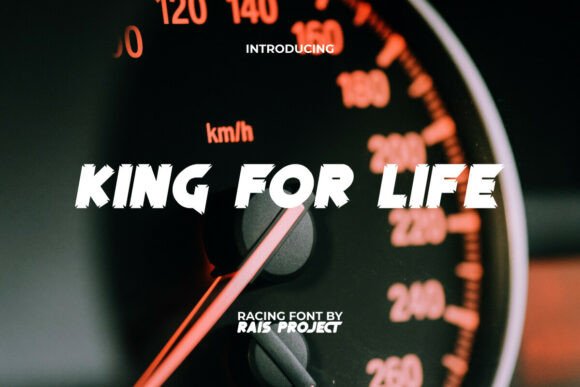
In the realm of visual communication, typography is rarely just about legibility; it is a primary vehicle for conveying tone, speed, and intent. For professionals working in automotive branding, sports marketing, or action-oriented media, finding a typeface that inherently communicates velocity without relying on excessive graphical embellishment is a critical challenge. King for Life addresses this specific need as an aggressive, all-caps display sans-serif typeface designed to capture the high-octane energy and speed of motorsports. Unlike standard geometric sans-serifs that prioritize neutrality, King for Life introduces sharp, slanted edges and a slight distortion that mimics motion blur, creating an intense, adrenaline-fueled aesthetic immediately upon viewing.
Integrating a font like King for Life into a project requires more than simply selecting it from a menu; it demands an understanding of how its unique characteristics interact with layout, color, and brand strategy. This guide explores the practical implementation of King for Life within professional workflows, examining how to prepare assets, execute designs efficiently, and ensure long-term consistency across various media platforms.
Understanding the Visual Mechanics of King for Life
Before applying King for Life to a project, it is essential to analyze its structural properties to understand where it fits best in a design hierarchy. The font features bold, tightly spaced letterforms built for maximum impact and readability at a glance. This makes it particularly effective for fast-paced visual contexts where the viewer has only a fraction of a second to absorb the message. The slight distortion inherent in the design mimics the physics of motion, suggesting that the object or concept being branded is already moving at high speed.
From a technical standpoint, the all-caps nature of King for Life means it lacks the vertical rhythm variation found in mixed-case typefaces. This uniformity creates a solid, block-like presence that commands attention but requires careful management of leading (line spacing) and kerning (letter spacing). In a workflow context, this means designers must anticipate the need for generous whitespace around the text to prevent the design from feeling cluttered or overwhelming. The aggressive slant of the characters also influences the overall composition, often necessitating diagonal alignment or dynamic cropping of accompanying imagery to maintain visual harmony.
Strategic Application in Branding and Marketing Workflows
The utility of King for Life extends beyond simple aesthetics; it serves as a strategic asset in branding and marketing campaigns targeting specific demographics. For automotive and racing branding, this typeface acts as a shorthand for performance and reliability. When developing a logo or a campaign header, utilizing King for Life can instantly align a new product line with established values of speed and power. However, the integration process should begin during the planning phase, not after the initial mockups are created.
Pre-Project Planning: Before downloading or licensing the font, evaluate whether the brand identity supports such an aggressive tone. King for Life is not suitable for every industry; it thrives in sectors that value grit, competition, and uncompromising speed. If the brand voice is soft, luxury-focused, or minimalist, this typeface may clash with the core message. Conducting a mood board analysis early in the process ensures that the font choice aligns with the broader creative direction.
Execution Phase: During the actual design execution, King for Life functions best as a headline or title element rather than body copy. Its distortion effects, while visually striking, reduce legibility when used in large blocks of text. A practical workflow involves pairing King for Life with a neutral, highly readable sans-serif for supporting information. This combination allows the aggressive energy of the main title to stand out while ensuring the necessary details remain accessible to the audience. For example, in a video game title screen, King for Life might serve as the game name, while a cleaner font handles the "Press Start" prompt or player statistics.
Use Cases Across Different Industries
- Automotive and Racing: Ideal for team liveries, race car decals, and promotional banners where the font's motion blur effect reinforces the reality of the sport.
- Sports Team Logos: Effective for teams emphasizing physical dominance and aggression, such as football, hockey, or extreme sports franchises.
- Edgy Streetwear Apparel: Perfect for graphic tees and hoodies where the typography serves as the primary visual statement, appealing to youth culture and urban aesthetics.
- Action-Movie Posters: Utilized to set the tone for thrillers or sci-fi films, communicating danger and urgency before the viewer even reads the plot summary.
- Video Game Titles: Essential for racing simulators, combat games, or any interactive entertainment requiring a sense of immediate action.
Optimizing Compatibility and Technical Implementation
Successful integration of King for Life also depends on technical compatibility and file management. As a display font, it may have specific rendering requirements depending on the software environment. Whether working in Adobe Illustrator, Photoshop, or web-based design tools like Figma, ensure that the font files are properly installed and linked to avoid substitution errors during the handoff process.
For digital applications, consider the weight and resolution of the output. The sharp edges of King for Life can sometimes appear jagged on low-resolution screens if not optimized correctly. When exporting assets for social media or mobile apps, test the font at various sizes to ensure the motion blur effect remains crisp and does not turn into pixelated noise. Additionally, when preparing files for print, verify that the vector outlines are clean and that the tight spacing does not cause ink trapping issues during the printing process.
Consistency is another key factor in long-term use. Once King for Life is adopted as part of a brand's visual identity, it should be applied uniformly across all touchpoints. Create a style guide that dictates exactly how the font is to be used—specifying minimum sizes, acceptable color combinations, and prohibited pairings. This documentation helps freelancers, interns, and external agencies maintain the integrity of the brand, preventing the dilution of the aggressive aesthetic through misuse.
Workflow Integration and Efficiency Tips
To maximize efficiency when using King for Life, incorporate it into your asset library early. Many designers make the mistake of searching for the perfect font late in the production cycle, leading to rushed decisions and potential rework. By establishing King for Life as a go-to resource for specific project types, you streamline the decision-making process. Create template files with the font pre-loaded for common deliverables, such as event posters or social media headers. This reduces setup time and allows you to focus on refining the layout and messaging.
Furthermore, consider the interaction between the font and other design elements. Because King for Life is so dominant, it often dictates the placement of other graphics. In a collaborative environment, communicate clearly with photographers and illustrators about the need for negative space. Images should be cropped or composed to leave room for the slanted, expansive nature of the letterforms. This proactive approach prevents the final design from looking cramped or unbalanced.
Quality Control and Long-Term Viability
As with any specialized tool, regular quality control checks are necessary to ensure King for Life continues to meet project standards. Over time, trends in typography shift, but the fundamental appeal of motion-based fonts remains relevant in high-energy industries. Periodically review past projects to assess how well the font has aged and whether it still resonates with the target audience. If the font begins to feel overused or cliché within a specific niche, consider exploring variations in color treatment or texture to refresh its appearance without changing the underlying typeface.
Ultimately, King for Life is more than just a collection of characters; it is a functional component of a larger communication strategy. By understanding its mechanics, planning its application carefully, and maintaining strict quality control, professionals can leverage its aggressive, all-caps design to create impactful visuals that drive engagement. Whether you are designing a logo for a racing team, creating a poster for an action film, or branding a streetwear line, the disciplined integration of King for Life ensures that your message is delivered with the speed and intensity it deserves.