Cute Shape: A Practical Guide to Implementing Playful Typography in Your Design Workflow
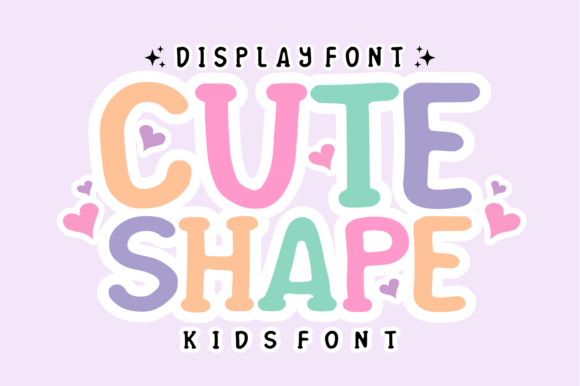
In the landscape of digital and print design, selecting the right typeface is rarely just an aesthetic choice; it is a strategic decision that influences readability, brand perception, and audience engagement. For professionals working with youth-focused materials, educational content, or family-oriented branding, the Cute Shape Kids Font offers a distinct solution. This display typeface is engineered to capture the playful imagination of childhood through thick, rounded letterforms that mimic colorful, soft shapes with smooth edges. However, integrating such a specific font into a professional workflow requires more than simply downloading a file. It demands an understanding of how Cute Shape functions within broader design processes, from initial concept planning to final quality control.
Defining the Role of Cute Shape in Visual Communication
Before implementing any asset, designers must understand its functional boundaries. Cute Shape is not a body text font intended for long-form reading; rather, it is a display typeface designed for headlines, logos, and short bursts of text where impact and character are paramount. Its cheerful, bold structure ensures great visibility, making it instantly approachable. The font exudes a happy, friendly energy, which is critical when the goal is to communicate warmth and creativity without relying on complex imagery.
The unique value proposition of this typeface lies in its geometry. The thick, rounded strokes resemble physical objects—like building blocks or marshmallows—which psychologically signals safety and fun to children while appealing to adults looking for high-quality, non-threatening design elements. When you introduce Cute Shape into a project, you are effectively setting a tone of "simple, delightful fun." This makes it an essential asset for designers who need to convey these specific emotions quickly and efficiently, reducing the cognitive load on the viewer and allowing them to focus on the core message.
Strategic Integration During the Planning Phase
Successful implementation begins before the first pixel is placed. In the planning stage of a project, such as designing a children's book cover or creating signage for a daycare, the decision to use Cute Shape should be driven by the target demographic and the desired emotional response. Professionals should evaluate whether the project requires a whimsical, soft aesthetic or a more rigid, academic look. If the former is required, Cute Shape becomes a foundational element of the creative brief.
During this phase, consider how the font interacts with your color palette. As demonstrated in standard previews, the bold structure of Cute Shape is ideal for overlaying with vibrant color palettes. Because the letterforms have smooth edges and significant weight, they can handle high-contrast backgrounds and gradients without losing legibility. Planners should map out these color interactions early to ensure the final output maintains consistency. For instance, if you are designing educational games, the font's ability to stand out against busy, colorful backgrounds ensures that instructions remain clear even amidst visual noise.
Execution: Applying Cute Shape to Specific Use Cases
Once the plan is set, the execution phase involves applying the typeface across various mediums. The versatility of Cute Shape allows it to function effectively in several distinct scenarios, each requiring a slightly different approach to layout and hierarchy.
- Children’s Book Covers: Here, the font often serves as the primary focal point. The thick letterforms allow for creative manipulation, such as embedding small icons within the negative space or using drop shadows to create depth. The goal is to make the title pop off the shelf, leveraging the font's inherent friendliness to attract young readers and their parents.
- Educational Games and Apps: In interactive environments, usability is key. Cute Shape works well for button labels, score displays, and level titles. Its rounded nature reduces visual aggression, making the learning environment feel less like a test and more like play. Designers should pair it with a clean, sans-serif body font to maintain readability for longer instructions.
- Product Packaging: For toys, snacks, or craft kits, the font communicates the product's nature immediately. On packaging, it helps establish a brand identity that feels safe and engaging. The bold structure ensures the product name is legible from a distance on a retail shelf.
- Daycare Signage and Event Invitations: Physical signage and printed invitations require fonts that are legible at various sizes. Cute Shape excels here because its characters do not rely on fine details that might get lost in printing or at a glance. It sets a welcoming tone for parents entering a facility or opening an invitation.
Workflow Optimization and Tool Compatibility
Integrating Cute Shape smoothly into your existing workflow depends on compatibility and organization. Most modern design software, including Adobe Illustrator, Photoshop, Canva, and Figma, supports standard OpenType or TrueType files. Before starting a project, ensure the font file is properly installed and activated on your system to avoid rendering issues.
A common pitfall in design workflows is inconsistent font usage. To maintain efficiency, create a style guide or a template library where Cute Shape is pre-configured with appropriate kerning, leading, and color settings. Since the font features thick letterforms, tight tracking (letter spacing) can sometimes cause letters to merge visually, especially in all-caps headers. Adjusting the tracking slightly during the setup phase saves time during the editing process and ensures a polished final result.
Furthermore, consider how this font interacts with other assets in your toolkit. If you are using vector illustrations, the organic curves of Cute Shape complement hand-drawn styles perfectly. Conversely, pairing it with overly geometric or sharp-edged graphics can create visual dissonance. Consistency in style between the typography and the accompanying graphics is crucial for a cohesive professional output.
Quality Control and Long-Term Usability
As you move toward the final stages of a project, quality control becomes the priority. When proofing designs that utilize Cute Shape, pay close attention to legibility at different scales. While the font is bold, extremely small sizes may cause the internal counters (the enclosed spaces in letters like 'a', 'e', 'o') to fill in, particularly in low-resolution prints. Always test the font at 100% zoom and in grayscale to check contrast levels.
For long-term use, such as building a brand identity for a startup or a recurring series of educational materials, consistency is vital. Once you decide to use Cute Shape as part of your brand voice, stick to it across all touchpoints. This builds recognition and trust with your audience. Over time, you will develop a deeper understanding of the font's strengths and limitations, allowing you to push its creative boundaries further while maintaining professional standards.
Final Thoughts on Implementation
The Cute Shape Kids Font is more than just a decorative element; it is a functional tool designed to bridge the gap between adult professionalism and childlike wonder. By understanding its role in the design process—from the initial planning stages to the final quality checks—creators can maximize its potential. Whether you are crafting a playful product package, designing a daycare sign, or illustrating a storybook, the thoughtful integration of this typeface ensures that your work resonates with warmth, clarity, and joy. With proper preparation and attention to detail, Cute Shape becomes an indispensable part of your creative arsenal, helping you deliver projects that are not only visually striking but also deeply effective in communicating their intended message.