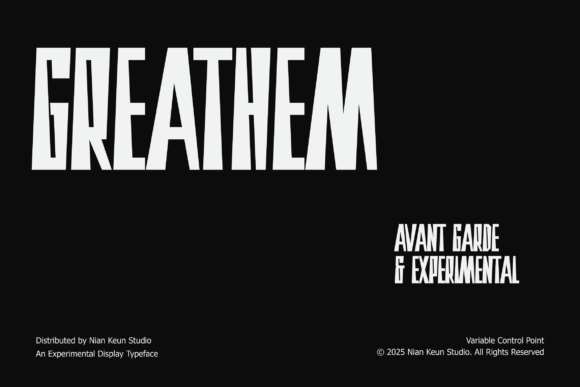
Greathem: Mastering an Experimental Display Typeface Without Losing Your Audience
In the crowded landscape of digital and print design, silence is often louder than noise. However, when you need to scream, whisper, or simply command absolute attention, standard typefaces rarely suffice. This is where Greathem enters the conversation. It is not merely a font; it is a visual statement designed to disrupt the status quo. With its extreme vertical tension, sharp geometry, and assertive stance, Greathem pushes visual proportions far beyond convention. If you are looking for a typeface that performs rather than blends in, this experimental display typeface offers the drama, scale, and modern brutalism required for high-impact projects.
Yet, powerful tools require skilled hands. While Greathem is perfect for editorial magazine headlines, fashion campaigns, and avant-garde brand identities, its aggressive nature can easily backfire if applied without strategy. Many designers fall into the trap of assuming that "bold" automatically equals "effective." In reality, the wrong application of such an intense typeface can lead to poor readability, confused messaging, and a disjointed user experience. Understanding how to leverage Greathem correctly ensures your project thrives on unconventional aesthetics without sacrificing clarity.
The Allure and the Risk of Extreme Vertical Forms
What makes Greathem so compelling is its unique construction. The tall, stretched forms emphasize drama and create a sense of towering presence. For music festival gig posters, art culture exhibitions, or bold website hero titles, this verticality creates an immediate visual hierarchy. It signals to the viewer that something significant is happening. The sharp angular construction adds a layer of edge, resonating with the energy of underground posters and cultural movements.
However, the very features that make Greathem stunning also make it risky. The most common mistake designers make is underestimating the cognitive load these extreme forms place on the reader. Because the characters are so elongated and geometrically complex, they demand more processing power from the brain than a standard sans-serif. When used incorrectly, this can cause eye strain and slow down reading speeds significantly.
If you apply Greathem to body copy or lengthy paragraphs, you will likely find that your audience abandons the content before finishing the first sentence. The tight spacing and dramatic shapes, which look fantastic at large sizes, become illegible clutter at smaller scales. This misuse directly impacts usability and communication efficiency. A headline that should grab attention instead becomes a barrier to entry, causing frustration rather than engagement.
Avoiding the "Big Font" Trap
To avoid these pitfalls, you must respect the intended scope of the typeface. Greathem is a display typeface, meaning it is engineered specifically for large sizes. The rule of thumb is simple: if you cannot read it instantly from a distance, it is too small. Use it exclusively for headlines, short captions, or single-word statements where impact is the primary goal. Never use it for navigation menus, footnotes, or instructional text.
Consider a realistic scenario: You are designing a poster for a fashion lookbook. Using Greathem for the main title, "VANGUARD," creates an immediate sense of authority and style. The vertical lines echo the silhouette of the models, reinforcing the theme. Now, imagine using the same font for the date, time, and venue details at the bottom. The result is a cramped, difficult-to-read mess that undermines the professionalism of the event. Instead, pair Greathem with a clean, neutral sans-serif for the informational elements. This contrast allows the experimental font to shine while ensuring the practical details remain accessible.
Context Matters: Where Greathem Shines and Where It Fails
Choosing the right environment for your typography is just as critical as choosing the font itself. Greathem carries the energy of modern brutalism and underground culture. It works exceptionally well in contexts that embrace chaos, movement, and high contrast. Think of experimental visual branding for tech startups aiming to disrupt their industry, or graphic posters for electronic music festivals where the atmosphere is electric and intense.
Conversely, there are scenarios where Greathem feels out of place. Corporate reports, educational materials, or healthcare communications generally require trust, stability, and calmness. Introducing a typeface with such an assertive stance in these environments can send mixed signals. It may appear aggressive or unprofessional, potentially damaging the brand's reputation. Before downloading or buying Greathem, ask yourself if your project truly needs to dominate the space, or if it simply needs to communicate information clearly.
Another overlooked detail is the medium of delivery. While Greathem looks incredible in print, where ink density and paper texture can soften the harsh edges, it requires careful handling on screen. On low-resolution displays or mobile devices, the sharp angles might render poorly, creating jagged edges that detract from the design. Always test your designs across different devices and screen densities. If the variable control point for style adjustment is available, utilize it to fine-tune the weight and width for specific digital environments.
Pairing Strategies for Balanced Design
One of the most effective ways to mitigate the intensity of Greathem is through strategic pairing. Since the font is so dominant, it should never compete with other visual elements. Pair it with a minimalist, legible typeface that recedes into the background. This creates a natural rhythm where Greathem acts as the anchor, drawing the eye, while the secondary font handles the narrative flow.
For example, in a bold website hero title, let Greathem take center stage with ample negative space around it. Follow up with a simple, humanist sans-serif for the sub-headline and body text. This approach respects the viewer's need for both stimulation and rest. It prevents the design from feeling overwhelming while still delivering the high visual impact that Greathem promises.
Evaluating Your Decision Before You Commit
Before integrating Greathem into your workflow, take a moment to evaluate your specific needs against the font's capabilities. Are you trying to solve a problem of invisibility, or are you adding style for style's sake? If your current design lacks focus, Greathem might be the solution. But if your layout is already cluttered, adding an experimental display typeface will only exacerbate the issue.
Check the licensing terms carefully. As with many specialized fonts, usage rights can vary between personal, commercial, and editorial applications. Ensure you have the appropriate license for your project to avoid legal complications later. Additionally, consider the cost-benefit ratio. While free versions might exist, professional licenses often come with better support, extended character sets, and variable control options that enhance flexibility.
Finally, remember that great design is about balance. Greathem is a tool for those who dare to break rules, but even rebels need structure. By understanding its limitations, respecting its scale requirements, and pairing it thoughtfully, you can harness its full potential. When used correctly, Greathem does more than just fill space; it transforms a message into an experience, commanding attention and leaving a lasting impression on your audience.