Kadera: A Modern Logotype for Future-Forward Branding
In the crowded landscape of digital design, typography often serves as the silent ambassador of a brand's identity. For professionals working in technology, gaming, and speculative fiction, finding a typeface that balances geometric precision with human readability is a persistent challenge. Kadera enters this space not merely as another futuristic font, but as a purpose-built logotype designed to meet the specific aesthetic demands of the modern tech sector. It represents a shift away from the overused, sterile sans-serifs of the past decade toward a more dynamic, modular approach to letterform construction.
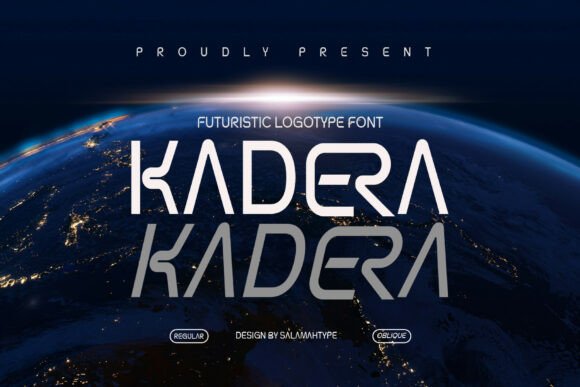
At its core, Kadera is an innovative logotype font that embodies the spirit of the future without sacrificing legibility. Designed for cutting-edge branding, it features a bold and modern aesthetic where unique letterforms merge strict geometry with minimalism. This fusion makes it particularly effective for sci-fi themes, tech startups, gaming studios, app interfaces, and broader digital design projects where visual impact is paramount. Unlike generic display fonts that rely on excessive decoration, Kadera achieves its futuristic look through structural integrity and intentional spacing.
The Structural Philosophy of Kadera
What distinguishes Kadera from other "futuristic" typefaces is its architectural foundation. The font features a powerful, angular design characterized by sharp intersections and clean lines, yet it avoids the harshness often associated with purely mechanical fonts. This is achieved through the use of rounded terminals and a distinct modular structure. These rounded elements soften the overall appearance, ensuring that the typeface remains approachable even when used in high-impact contexts like movie titles or aggressive marketing campaigns.
The modular nature of the characters suggests a sense of assembly and precision, qualities that resonate deeply with audiences in the engineering and software development sectors. When evaluating the font's quality, one notices that each character is carefully crafted to convey motion and digital elegance. There is a deliberate rhythm to the strokes; they do not merely sit on the page but seem to possess a forward momentum. This kinetic quality is essential for brands that want to communicate innovation, speed, and agility.
From a technical standpoint, the consistency of the stroke weight and the harmony between the angular cuts and rounded ends demonstrate a high level of typographic craftsmanship. In real-world applications, this balance prevents the text from becoming visually fatiguing, even when viewed at larger scales or in rapid succession during video sequences.
Flexibility Through Style Variations
A common limitation in many logotype fonts is a lack of versatility, forcing designers to choose between a single static style or paying for an extensive family that may never be fully utilized. Kadera addresses this by offering two distinct styles: Regular and Oblique. While this might seem like a modest offering compared to massive corporate font families, for a logotype-focused typeface, these two weights provide significant flexibility.
The Regular style serves as the anchor, providing a stable, authoritative presence ideal for primary logos, website headers, and packaging. Its upright posture conveys reliability and strength. Conversely, the Oblique style introduces dynamic energy. By slanting the characters, the font gains a sense of velocity and progression. This is particularly useful in gaming UIs, action-oriented posters, or any context where movement needs to be implied visually.
For freelancers and small business owners, this dual-style approach offers a practical solution. It allows for the creation of impactful hierarchies within a design without needing to mix disparate typefaces. A designer can use the Regular weight for a company name and the Oblique for a tagline, creating a cohesive yet energetic visual system that feels custom-made.
Technical Usability and Customization
Beyond aesthetics, the utility of a font depends heavily on its implementation. One of the most significant advantages of Kadera is its encoding strategy. The futuristic font is PUA-encoded (Private Use Area), which ensures effortless access to all glyphs, swashes, and alternate characters. In the world of professional typography, PUA encoding is a critical feature for creative control. It allows designers to bypass standard keyboard limitations and access specialized variants directly within their design software.
This technical architecture means that users are not restricted to the basic alphabet. They can customize their creations with ease, swapping in alternate characters to tweak the personality of a logo or adding swashes to enhance a headline. For instance, a tech startup might use a standard 'K' for their main logo but switch to an alternate, more angular version for their app icon to differentiate the brand across platforms. This level of granular control is often missing in free or low-cost fonts, making Kadera a valuable asset for serious creators who need unique solutions without commissioning expensive custom type design.
The reliability of the encoding also ensures that files remain consistent across different operating systems and design environments. Whether a project moves from Adobe Illustrator to Figma or is handed off to a developer for web implementation, the glyphs render predictably. This reduces the risk of layout shifts or missing character errors, a common frustration in collaborative workflows.
Real-World Application and Industry Fit
When considering whether Kadera fits a specific project, it is helpful to analyze its performance in various industry contexts. Its strengths are most evident in high-tech corporate identities. The combination of angular precision and rounded terminals mirrors the hardware and software ecosystems of today—devices that are sleek and metallic yet user-friendly. A fintech company or a cybersecurity firm could leverage Kadera to project an image of robust security combined with modern accessibility.
In the realm of gaming and entertainment, the font's ability to suggest motion makes it a strong contender for game titles, character names, and interface elements. The sci-fi community, in particular, will appreciate the font's inherent narrative quality. It looks like it belongs on a starship dashboard or a holographic projection, fitting seamlessly into world-building efforts for movies, books, and interactive experiences.
However, potential users should also consider where Kadera might not be the best fit. Due to its distinctive, stylized nature, it is primarily intended for headlines, logos, and short bursts of text. It is not designed for body copy or long-form reading. Attempting to use Kadera for paragraphs of text would likely result in poor readability and visual clutter. Professionals should view it as a display typeface—a tool for grabbing attention rather than conveying dense information.
Furthermore, while the font is versatile, its strong stylistic voice means it dominates a design. Pairing it requires careful consideration. It works best with neutral, minimalist sans-serifs for supporting text, allowing Kadera to shine as the focal point without competing for attention.
Long-Term Value for Designers
For entrepreneurs and marketers looking to build a lasting brand, investing in high-quality assets is crucial. Kadera offers long-term value because its design principles are rooted in enduring trends of minimalism and geometric abstraction rather than fleeting fads. The clean lines and modular structure ensure that designs created today will not look dated in five years.
The inclusion of PUA-encoded alternates further extends this value. As a brand evolves, the ability to subtly alter the typography without changing the fundamental typeface allows for refreshing a visual identity without starting from scratch. This adaptability is a key factor for growing businesses that need to pivot their messaging while maintaining brand recognition.
Ultimately, Kadera is more than just a set of digital letters; it is a strategic tool for communication. It speaks the language of the future with clarity and confidence. For designers, developers, and brand managers seeking a typeface that bridges the gap between industrial precision and digital elegance, Kadera provides a robust, flexible, and visually compelling solution. Its thoughtful construction, combined with practical technical features, makes it a worthy addition to any professional toolkit focused on modern, high-impact design.