Mordash: Mastering the Bold Retro Condensed Tall Reverse Contrast Aesthetic
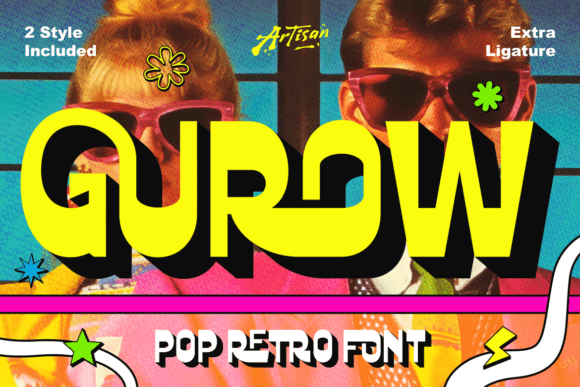
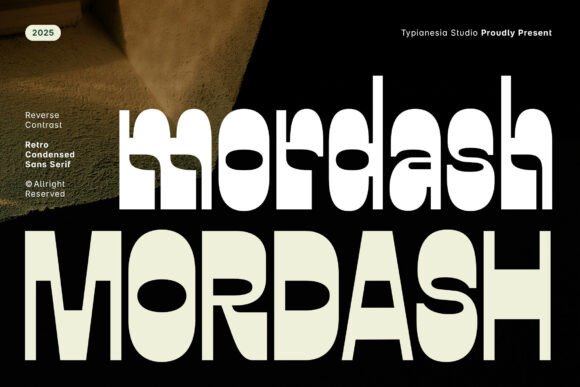
If you are looking to inject a dose of 1980s energy into your branding, Mordash is likely at the top of your search results. This typeface is not just another retro font; it is a specific design tool engineered with a bold, condensed, tall structure and a distinctive reverse contrast. It captures that groovy, fun vibe while maintaining the clean lines necessary for modern applications. However, finding a font that looks good on a screen does not automatically mean it will work in your final project. Many designers and business owners rush to download or purchase fonts like Mordash without understanding the nuances of its architecture, leading to designs that feel cluttered, illegible, or tonally mismatched.
The allure of Mordash lies in its ability to transport viewers back to an era of vibrant creativity. Its rounded terminals and smooth curves soften the aggressive nature of its height, making it approachable yet commanding. Yet, this unique combination of traits requires careful handling. When used correctly, it elevates coffee shop signage, creative packaging, and poster campaigns. When used incorrectly, it can undermine the very message you are trying to communicate. Let’s explore how to avoid common pitfalls and ensure your use of Mordash delivers the high-impact results you expect.
Understanding the Reverse Contrast Structure
One of the most frequent misunderstandings regarding Mordash involves its "reverse contrast" feature. In traditional serif typography, vertical strokes are thick and horizontal strokes are thin. In Mordash, this dynamic is flipped or manipulated in a way that creates a unique visual rhythm. The vertical elements often appear thinner relative to the heavy horizontals or curves, depending on the specific weight and style within the family. Beginners often mistake this for a standard bold sans-serif and apply it everywhere, assuming the thickness guarantees readability.
This assumption can lead to significant issues in small-scale applications. Because Mordash is designed as a display font, its intricate contrast and tight spacing are meant to be seen from a distance or at large sizes. If you attempt to use Mordash for body text, such as paragraph copy on a website or fine print on a menu, the result will be visually jarring and difficult to read. The eye struggles to track lines of text when the stroke weights vary so dramatically in a condensed format. To avoid this, reserve Mordash strictly for headlines, logos, and short phrases where its personality can shine without compromising legibility.
The Trap of Overcrowding Condensed Spaces
The "condensed tall" aspect of Mordash is its defining characteristic, allowing you to fit more characters into a narrow space while maintaining vertical dominance. This makes it incredibly efficient for posters where horizontal space is limited but vertical impact is desired. However, a common mistake is to push the tracking (letter-spacing) too tight in an attempt to maximize this effect. Designers often think that because the font is already condensed, they should pack the letters even closer together to create a solid block of color.
This approach usually backfires. The rounded terminals and the specific curvature of the glyphs need breathing room to define their shapes. When compressed too tightly, the negative space between letters disappears, causing the text to blur into an unreadable mass. Instead of looking bold and retro, the design looks messy and unprofessional. A better approach is to respect the natural spacing built into the font file. If you need to adjust the width, do so incrementally. Test your design at the intended viewing size before finalizing. If you cannot clearly distinguish individual characters from a few feet away, you have gone too far.
Matching the Vibe to Your Brand Identity
Mordash screams "fun," "groovy," and "retro." While these are positive attributes, they are not universal. A major oversight occurs when entrepreneurs apply this font to brands that require seriousness, minimalism, or clinical precision. For instance, using Mordash for a law firm, a medical practice, or a luxury financial consultancy sends mixed signals. The playful rounded edges and vintage flair clash with the trust and stability these industries strive to project.
Before committing to Mordash, ask yourself if your brand voice aligns with the 80s aesthetic. Is your product about nostalgia, creativity, and community? Does it fit the hospitality industry, where cafes and coffee shops thrive on a welcoming, energetic atmosphere? If the answer is yes, Mordash is a powerful ally. If your brand is understated or futuristic, this font might distract from your core message rather than enhance it. Always consider the emotional response you want to evoke. The right font reinforces your identity; the wrong one creates cognitive dissonance for your audience.
Evaluating Color and Background Compatibility
The bold nature of Mordash makes it a strong candidate for high-contrast pairings, but color choice remains a critical variable. The reverse contrast means the font has varying stroke densities. If you place Mordash on a busy background or a low-contrast color scheme, the lighter parts of the letters may vanish, leaving only fragments of the text visible. This is particularly risky for digital screens where compression and lighting conditions vary.
To mitigate this, always test your font against your chosen background colors before finalizing a campaign. Ensure there is sufficient contrast between the text and the backdrop. Solid blocks of color often work best with Mordash, allowing the rounded terminals to pop. Avoid complex gradients or photographic backgrounds directly behind the text unless you add a subtle drop shadow or outline to separate the type from the image. This simple step ensures that the retro charm of the font remains intact and readable across all mediums.
Practical Steps Before You Buy or Download
When evaluating Mordash for your next project, take a moment to review the full character set and licensing terms. Display fonts often come with limited glyph counts compared to text fonts. Check if the version you are considering includes the necessary ligatures, alternate characters, or extended language support if your audience is international. Additionally, verify the license scope. Are you allowed to use it for commercial packaging, or is it restricted to personal projects?
Download a trial version if available and create a mock-up of your actual intended use. Do not rely solely on the preview images provided by the foundry. Place the font in a real-world context—mock up a coffee cup sleeve, a t-shirt design, or a social media banner. This practical test will reveal any spacing issues, readability problems, or stylistic mismatches that a static preview might hide. By taking these proactive steps, you ensure that your investment in Mordash yields a polished, professional result that truly captures the spirit of modern vintage design.