Bunkasai: Where Japanese Brushwork Meets Modern Digital Design
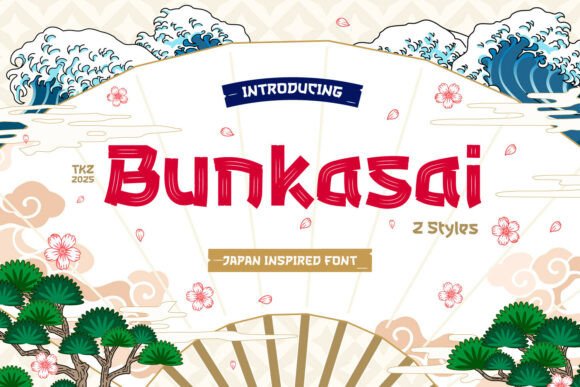
In an era where digital interfaces often feel sterile and uniform, the demand for typography that breathes with organic life has never been higher. Designers are increasingly looking beyond standard geometric sans-serifs to find typefaces that convey story, texture, and cultural depth. Enter Bunkasai, a sleek, Japan-inspired display font that is redefining how we approach visual hierarchy in branding and creative projects. By featuring a unique bamboo-like brush stroke texture, Bunkasai captures the elegance of Asian design while remaining fully functional within modern digital workflows.
The appeal of this font lies not just in its aesthetic, but in its ability to bridge the gap between traditional craftsmanship and contemporary utility. It offers a handcrafted style that adds a natural and artistic touch, yet it includes a solid version that provides a clean and bold alternative for versatile use. This duality makes it an essential tool for professionals navigating the complex landscape of modern visual communication.
The Evolution of Organic Typography in Digital Spaces
For decades, the dominance of minimalist design trends pushed typography toward extreme simplicity. Clean lines, perfect circles, and rigid grids became the gold standard for corporate identity and web design. However, as audiences become more visually literate and fatigued by generic aesthetics, a shift is occurring. There is a growing appreciation for imperfection, texture, and the human hand in digital art. This movement aligns perfectly with the philosophy behind Bunkasai.
The "bamboo-like" texture found in the primary strokes of this font is more than a decorative element; it is a nod to the tactile nature of traditional calligraphy. In the physical world, the variation in ink flow and the pressure of the brush create character. Translating this nuance into a vector font requires significant skill. Bunkasai succeeds by maintaining the spirit of these irregularities without sacrificing legibility or scalability. This evolution reflects a broader market preference for designs that feel authentic rather than algorithmically generated.
As remote work and digital-first business models continue to expand, brands are struggling to establish a genuine connection with their audience. A logo or headline that feels too polished can sometimes feel distant. By incorporating elements that suggest human effort and cultural heritage, designers can evoke trust and warmth. The rise of interest in mindfulness, sustainability, and global cultures has further fueled the desire for typefaces that reflect these values. Bunkasai taps into this sentiment by offering a visual language that speaks to both tradition and modernity.
Why Texture Matters in Brand Identity
Texture in typography serves a psychological function. It slows down the eye, encouraging the viewer to linger on the message. When applied to a brand identity, this subtle friction can differentiate a company from competitors who rely on flat, two-dimensional graphics. The bamboo texture in Bunkasai suggests growth, resilience, and flexibility—qualities that many businesses aspire to embody.
Consider the application of this font in the wellness industry, where brands often seek to communicate natural ingredients and holistic approaches. A standard serif or sans-serif might fail to convey the organic essence of the product. Bunkasai, with its inherent brush stroke quality, immediately signals a connection to nature and artisanal care. Similarly, in the culinary sector, particularly for restaurants specializing in Asian fusion or high-end dining, the font acts as a visual shorthand for authenticity and culinary expertise.
Versatility Through Duality: The Solid Version Advantage
One of the most practical aspects of Bunkasai is its inclusion of a solid version. While the textured brush stroke is the star of the show, it is not always suitable for every context. Small print sizes, low-resolution screens, or backgrounds with high contrast can sometimes render intricate textures illegible. The solid version solves this problem by offering a clean and bold alternative that retains the structural integrity and weight of the original design.
This dual-approach allows for a cohesive typographic system. A designer might use the textured version for a large, impactful headline on a poster or a book cover, drawing immediate attention with its artistic flair. Simultaneously, they could utilize the solid version for subheadings, body text accents, or mobile app interfaces where clarity is paramount. This flexibility is crucial for entrepreneurs and freelancers who need to maintain brand consistency across various media channels without compromising on readability.
From a technical standpoint, having both versions streamlines the workflow. Instead of searching for a complementary font to pair with a display typeface, creators have a built-in solution. This efficiency is highly valued in fast-paced marketing environments where time-to-market is critical. It ensures that the "authentic Japanese vibes" remain consistent whether the design appears on a massive billboard or a tiny social media icon.
Practical Applications Across Industries
The versatility of Bunkasai extends to a wide array of creative projects. Its impact is most visible when used in specific contexts where personality is key:
- Logos and Branding: For startups aiming to position themselves as innovative yet grounded, Bunkasai offers a distinctive mark. The unique stroke texture ensures the logo stands out in crowded marketplaces like tech incubators or boutique retail sectors.
- Book Covers: Authors of historical fiction, travelogues, or philosophical works can leverage the font to set the mood before a reader even opens the page. The handcrafted style suggests a narrative rich in detail and emotion.
- Posters and Event Marketing: Cultural festivals, art exhibitions, and music concerts benefit from the dynamic energy of the brush strokes. The font commands attention and conveys a sense of eventfulness and excitement.
- Game Titles and Movie Logos: In the entertainment industry, setting the tone is everything. Whether it is a strategy game set in feudal Japan or a cinematic thriller with Eastern influences, Bunkasai brings immediate atmosphere and sophistication.
- Apparel and Merchandise: On t-shirts, hoodies, and tote bags, the texture translates well to fabric prints. It adds a layer of depth that flat vector graphics often lack, making the merchandise feel more premium and curated.
Navigating Cultural Sensitivity and Authenticity
As global markets become more interconnected, the use of cultural motifs in design requires a thoughtful approach. Borrowing from another culture's visual language can easily slip into appropriation if not done with respect and understanding. Bunkasai addresses this by focusing on the essence of the design rather than superficial stereotypes. The font is inspired by the elegance of Asian design principles, specifically the rhythm and flow of brushwork, rather than relying on clichéd imagery.
For professional designers and business owners, choosing a font like Bunkasai is an opportunity to engage with these cultural roots meaningfully. It encourages users to consider the context in which the font is placed. Is the project celebrating the culture? Is the messaging aligned with the values of harmony and balance often associated with the aesthetics? When used correctly, the font becomes a bridge, fostering appreciation and understanding rather than confusion or offense.
This level of consideration is becoming a standard expectation among consumers. Audiences today are savvy; they can distinguish between genuine appreciation and cheap imitation. By selecting a typeface that honors its inspiration through careful craftsmanship, brands demonstrate a commitment to quality and respect. This aligns with the broader trend of ethical consumption and conscious branding, where the story behind a product matters as much as the product itself.
Integrating Bunkasai into Modern Workflows
Adopting a new typeface into an existing design system requires planning. For agencies and in-house design teams, the introduction of Bunkasai should be strategic. It is best suited for display purposes rather than long-form reading. Integrating it into a style guide involves defining clear rules for usage: when to use the textured version, when to switch to the solid variant, and what color palettes complement the brush strokes best.
Modern design software handles complex vector paths efficiently, making fonts with detailed textures easier to implement than in previous years. However, designers must still test legibility across different devices. The bamboo-like strokes should remain crisp on high-resolution Retina displays and legible on standard mobile screens. Pairing Bunkasai with a neutral, simple sans-serif for body copy creates a balanced composition that guides the reader's eye effectively.
Furthermore, the font's adaptability supports the growing trend of motion graphics. The organic shapes of the letters animate beautifully, allowing for fluid transitions in video content and interactive web experiences. This capability makes Bunkasai a forward-looking choice for digital marketers and multimedia creators who need assets that perform well in both static and dynamic formats.
Recommendations for Creators and Professionals
To maximize the potential of Bunkasai, creators should focus on whitespace and layout. The intricate details of the font deserve room to breathe. Crowding the text can obscure the very texture that gives the font its character. Additionally, experimenting with color gradients or overlays can enhance the three-dimensional feel of the brush strokes, adding depth to logos and headlines.
For businesses looking to refresh their identity, Bunkasai offers a pathway to modern sophistication without losing a sense of heritage. It is a tool that invites storytelling, encouraging brands to share their unique narratives with confidence. As the design landscape continues to evolve, prioritizing typefaces that offer both aesthetic richness and functional versatility will remain a key differentiator for successful projects.
Ultimately, the value of Bunkasai lies in its ability to connect. It connects the past with the present, the digital with the tactile, and the brand with the audience. In a world saturated with information, a font that stops the scroll and invites a closer look is not just a design choice—it is a strategic asset.